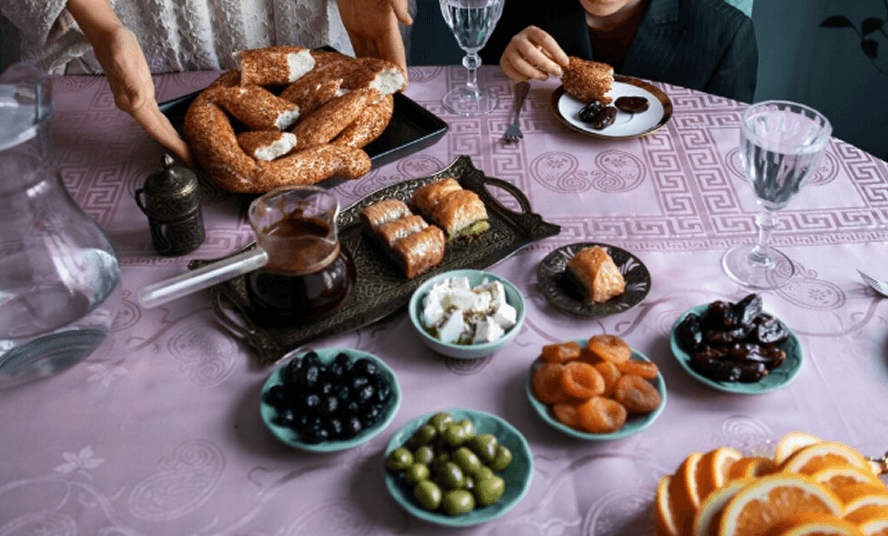
Overeating at iftar can cause discomfort, bloating, and fatigue. Break your fast slowly with water and a few dates, then wait a few minutes before starting your main meal. Eating mindfully and stopping when you feel satisfied helps your body adjust and keeps your energy steady for nighttime worship.
- Good to Know
The Prophet Muhammad (peace be upon him) encouraged moderation during iftar. Eating slowly and in smaller portions allows your stomach to signal fullness and prevents overindulgence.
- ☕ Tips for Today
- Begin with dates and water.
- Eat slowly and chew thoroughly.
- Use smaller plates to control portion sizes.
- Pause briefly between courses to check if you feel full.
- Avoid rushing through your meal after fasting.
- 🔔 What's Next
Tomorrow, we will focus on Slow-Digesting Carbs for Steady Energy to support fasting hours.